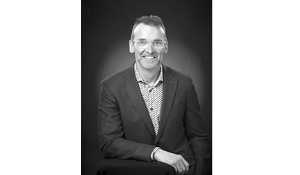
Jago, Teed talk about importance of peer support networks for mental health and additions
September 22, 2025, 12:17 pm
Nicole Taylor, Local Journalism Initiative Reporter

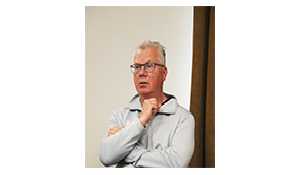
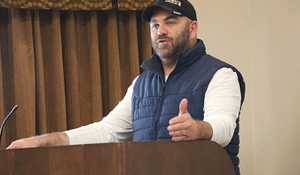
At the Moosomin Chamber of Commerce meeting on Tuesday, Mark Jago, Executive Director of Sask Peer Support Networks, gave a presentation on the role of peer support networks in supporting people through mental health and addictions once they are out of treatment. Jago is setting up peer support networks across the province.
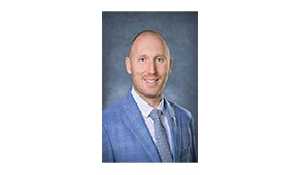
Rand Teed, an expert on addictions and recovery, also spoke at the meeting.
Jago says Saskatchewan Peer Support Networks is a non-profit community-based organization that got its start in Melfort.
“Our mission statement is to make sure that no one walks the path of addiction recovery and mental health alone,” said Jago. “We connect those in need with peer support and empower group facilitators to lead with confidence and care. Our organization is rooted in empathy and mutual respect, fostering safe, inclusive spaces where healing and hope can flourish.”
He recounted how the idea came to be.
“I’m from Melfort, Saskatchewan and we had a friends’ group and one of our friends said that we should start a peer support group, that our town was hurting. This was right at the beginning of Covid, when people weren’t dealing with just things like alcohol and drug problems, but with a lot of mental heath issues as well. You could feel our towns becoming more and more stress-filled, so we started a small peer support group,” he said.
“Some of the stories that came out of that group drifted down to Regina and into the Legislature, right when they were beginning to develop recovery-oriented systems of care, so we fit in with that perfectly. They basically ran an experiment for us, hiring our non-profit to go out into the world and duplicate what we were doing in Melfort. I spent the first year driving around the province, confirming what I already knew in my head and my heart—there was a deep need for this.
“If you sit down with someone and share your life honestly, what’s going on and what has gone on, and how you’re doing with that, healthy or unhealthy, there is healing in that. As we walk along side each other, neighbor helping neighbor, there’s healing in that and I’ve seen it. I also believe that if we’ve been comforted in our own afflictions, we may have the opportunity to comfort and help others.”
He talked about how the network is currently helping grow Saskatchewan’s recovery-based care initiatives.
“It’s a team approach to recovery that goes well beyond removing the unhealthy choices. For so many years, if not decades, the mentality was that, if we take away the unhealthy choices or if we could make a diagnosis, that was where recovery just ended. If we know what we need to remove from our life, our life should get better, and we’re learning that isn’t the case, that recovery is ongoing.
“So it’s not just sobriety from the physical, such as alcohol and drugs, its also working through the anxiety, stress, and mental tole of life’s challenges. This has become just as powerful a weapon in our lives as alcohol or drugs.”
Jago said peer support is not meant to replace professional help, but to accompany it.
“Peer support offers a deep breath to talk about what is going on in our lives, which is a different feel from professional help,” he says. “Professional help is very needed, we don’t want to ever replace it, but there is a different feel sitting down with somebody that is unpaid. When you are sitting with a counselor or a medical professional, they’re paid to care for you. There is something about sitting with somebody that is just there to share their life with you and to walk along side you, there’s a different feel to it, and so that is what we are offering. Those with experiences can empathize and understand the challenges, that impact of neighbour hearing from neighbour.
“So a lot of times in peer support, they’ve already been told a lot of things from their family and friends that care about them, their medical professionals, but when you hear from somebody that has gone through that same experience and offer them hope, it hits hard.”
Jago says Sask Peer Support Networks offer people support before, during and after treatment, and is building an online hub to help people find local peer support groups, and also to provide resources, guidance, training and mentorship for facilitators and peer support group leaders.
He said the hope is that if enough peer support networks are set up through the province, it will help people enough that they won’t end up back in a treatment bed.
He said there are various ways for people in a community to help with peer support.
“Just let people know the value of what peer support is,” he said. “For a long time peer support was just kind of left out in the woods. That is changing in a dramatic way because the professional world is seeing the value of peer support.
“If there is a group that comes out of this meeting that wants to start a peer support group, there is only one real need for a group to start, and that’s a room to meet. A lot of time the meetings are held in churches or hotels because that’s generally where the most generous rent comes from.”
He said it’s also helpful for people in the community to recommend a group facilitator who can run the local chapter.
Jago said anyone wanting to start a peer support group can contact him at 306-921-8681 or saskpeergroups@gmail.com. He said he also wants to know about existing peer support groups in communities so that he can add them to the website so people can access them.
Moosomin is working on establishing an addictions treatment centre in town. Chamber president Kevin Weedmark asked him how much of a difference a peer support group would make to that treatment centre.
“People are going to be going through treatment here in Moosomin and they are going to be learning a lot of new stuff and it’s a place where they can talk about it and actually go through it with people around the room at all different walks of life,” said Jago. “I’s going to be that extra support that is just that neighbor helping neighbor which is invaluable.
“So if people are coming into Moosomin from all corner of the province for this treatment, they are going to build a bond and then they are going to have a great experience with a peer support group here in Moosomin, and then they will want to take that back to their home town and hopefully there will be something there waiting for them.
“So it’s just a way to echo the professionals and then with talking with their peers, it’s going to make more sense to each other.”
Teed says peer support groups are about connection
After Jago’s presentation, Rand Teed, an expert on addictions and recovery, talked about the importance of peer support networks and how they are essential to people on a tough journey.
“I really like Mark’s program because what’s it’s doing is creating a connection,” he said. “One of the huge issues that happens to people with mental health issue or drug and alcohol issues is they feel like they are ashamed. Stigma is the word we use to talk about that stuff. So it’s hard for them to open up about what’s going on.
“But when you are in a room with other people who are also having some struggle, that starts to make it a little bit easier.
“Fifteen per cent of a person’s problem when they are having a drug and alcohol problem is about the drugs and alcohol. The other 85 per cent is about lifestyle, it’s about how they are managing life, how they deal with stress, how they deal with emotional ups and downs, and programs like emotions anonymous, counselling all those kinds of things are really designed to help a person reprogram how they respond to things.
“And the advantage of a group to go talk to is you start to feel a little bit better because there’s somebody else that’s kind of feeling the same way.
“Everything else is about how to get better, how to feel better and how to do better. And recovery programs are designed to help start that process. Peer support programs and after care programs are designed to help keep that process going until you feel okay about it and get back to being yourself.”
Teed said he has met several times with the group working on starting an recovery centre in Moosomin and his helping them formulate their application.












-SM.jpg)