Wagantall reflects on what kind of year 2025 has been for the Conservatives
January 12, 2026, 5:27 pm
Nicole Taylor, Local Journalism Initiative Reporter
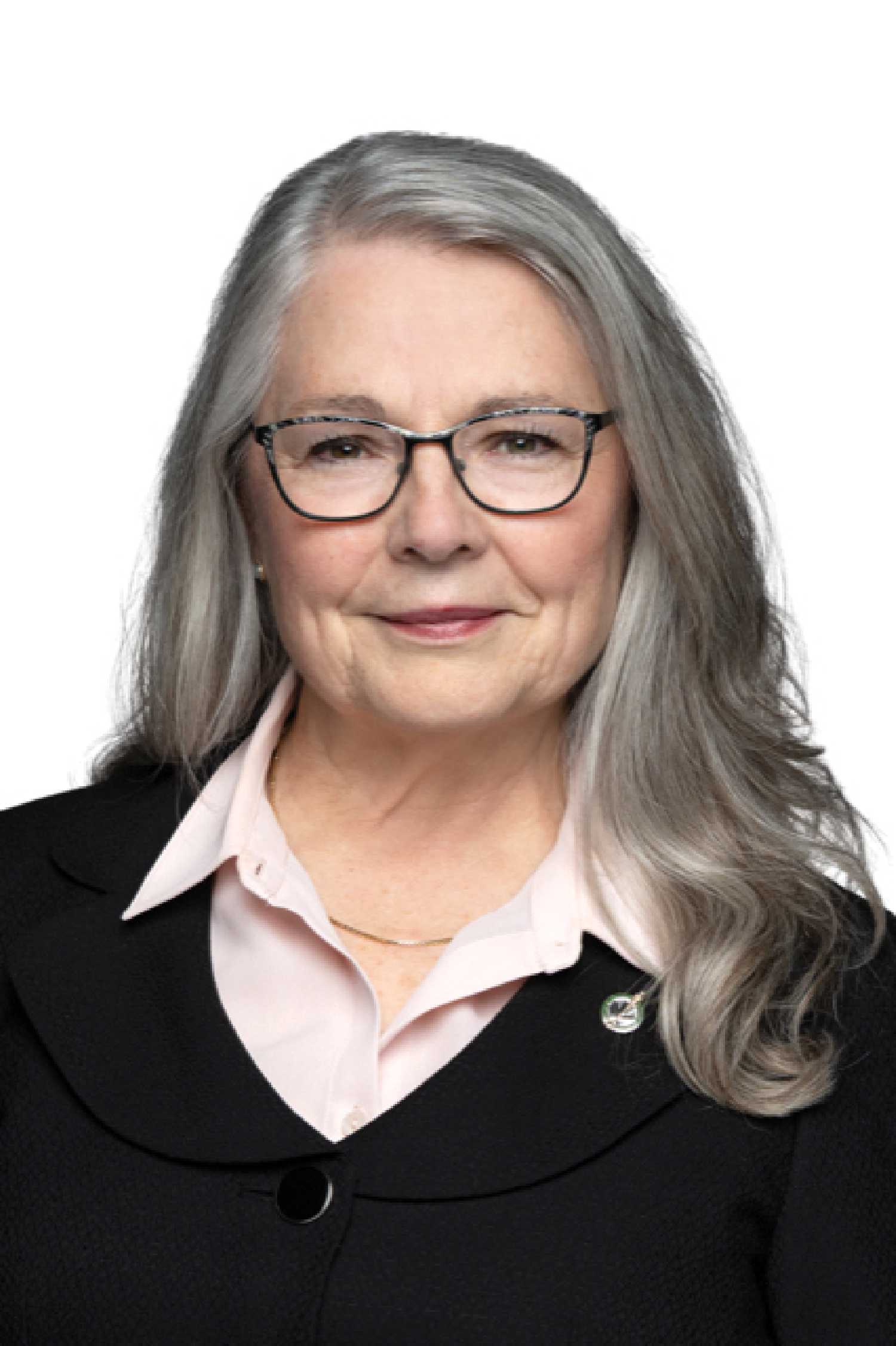

The World-Spectator asked Yorkton-Melville MP Cathay Wagantall for her take on 2025, and her thoughts on what 2026 may hold. Following are here comments.
What were some of the highlights of 2025?
It was the highest honour to earn the trust of the good people of Yorkton-Melville for a fourth term as their Member of Parliament. Speaking up for their hopes and concerns in Ottawa has continued to be my first priority.
Since April’s election, some good work has been done on their behalf. As His Majesty’s Loyal Opposition, Conservatives have been effective in amending, splitting and, when necessary, delaying elements of the Liberal Party agenda.
A great example of this was on bill C-5—the Liberals’ “One Canadian Economy Act” and “Building Canada Act.” Conservative pressure forced some amendments that removed some of the most obvious overreach of the original bill—such as bypassing the Indian Act—and inserted some provincial consultation safeguards.
We were also able to make it clear that the final decision on a pipeline as a national project that crosses provincial boundaries is the Prime Minister’s.
It was through Conservative pressure that the consumer carbon tax was set to ‘0’ (though not yet completely abolished, and the industrial carbon tax remains in place).
We were able to stop the planned capital gains tax increase on workers, home builders, doctors, farmers, and small businesses.
And, although the Liberal government’s actions have yet to match their words, Conservatives can be credited with shaping a more resource-friendly energy posture across the country. Unfortunately, for a Prime Minister that promised to ‘build now’ and move at ‘unimaginable speeds,’ Canadians have seen nothing but paper shuffling and press conferences after eight months.
It will be our continued duty to hold the Liberals to account. Overall, we still have a federal government that remains hostile to the economic aspirations of our province and has burdened Saskatchewan’s workers and families with high taxes, record crime rates, and a cost-of-living crisis with no end in sight.
What were some of the things you accomplished?
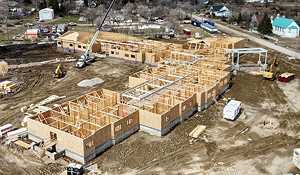
The health and wellbeing of Canada’s veterans remain a key focus of my work in Ottawa and at home. For the past several years, I have been working closely with veterans, experts, and local partners to establish and develop the work of the Yorkton Veterans Foundation (YVF). YVF has been incorporated and is now moving toward receiving charitable status with an ultimate goal of creating transitional housing and a wraparound wellness centre for homeless and struggling veterans in Saskatchewan.
I also continue to support veterans struggling with the adverse effects of the anti-malarial drug, mefloquine, and champion Audeamus Service Dogs as a local, provincial, and national source for veterans’ service dogs.
What were some of the disappointments in 2025?
It is disappointing to see that Justin Trudeau’s disastrous ethical record has continued under Mark Carney. He entered office with massive, undisclosed financial entanglements tied to his past work with Brookfield and global finance. He delayed revealing his assets and then relied on a so-called “blind trust” and an internal conflict-of-interest screen that provided no real independence or accountability. These weak safeguards left Canadians exposed to the very real possibility that Carney’s policy decisions could enrich his former employers or even himself. This behavior undermines public trust and exploits loopholes that no prime minister should be allowed to hide behind. That’s why Conservatives are fighting for stronger disclosure rules, mandatory divestment, and genuinely independent oversight to ensure Canadians’ trust is not betrayed.
I have also been particularly dismayed with the devaluation of Canadian citizenship in recent years. Canada once had an immigration system admired the world over, but a decade of Liberal incompetence has led to a loss of control and broken trust.
Last year, over half of the people who became Canadian citizens did so by clicking a box online, a practice begun under this Liberal government. Justice Minister Sean Fraser even defended virtual ceremonies, saying the practice could be easier for bureaucrats to manage.
Conservatives believe that in-person citizenship ceremonies are the essential, unifying bedrock of Canada’s civic life for new Canadians. Swearing the oath of citizenship in front of an official should be upheld as an integral part of committing to the responsibilities that come with being Canadian. We will continue to demand a return to in-person citizenship ceremonies to restore the value of Canadian citizenship.
The Carney Liberals are blocking an Alberta-to-Pacific pipeline with empty announcements instead of confirming a pipeline construction date. The recent memorandum of understanding does not promise a pipeline will be built; just that, seven months from now, a proposal will be referred to a federal office for two more years of study, and the Prime Minister continues to insist no matter what, B.C.’s NDP premier will still have a veto. A Conservative government would approve a pipeline to the Pacific without a carbon tax, without delay, and without excuses.
Just before the House rose through an amendment to Bill C-9—the Liberal government’s so-called “Combating Hate Act”—the Bloc Québécois has agreed to support the bill in exchange for removing the long-standing defence that protects good-faith religious opinion or speech rooted in religious texts. At the Justice Committee, Conservatives have brought forward two amendments to lessen the blow to religious freedom and free speech. I spoke to this terrible infringement on Canadians charter right to the “good faith” defence.
On all these fronts, I hope to see positive developments in 2026.
What happened in 2025 that had the most effect on your constituents?
The cost-of-living crisis has had a devastating effect on individuals and families. Liberal inflation has driven food prices 27 per cent higher than they were just five years ago and November prices grew at the fastest pace in nearly two years. Families could expect to pay $17,572 in grocery costs alone next year—up an additional $1,000 from this year. This is not sustainable.
Perhaps more devastating is that a whole generation has been locked out of the housing market. After a decade of Liberals in power, housing prices have doubled and the dream of owning a home has never been more out of reach.
Carney’s budget broke his promise to halve municipal home building taxes while his increasingly expensive Industrial Carbon Tax raises the cost of key housing inputs like cement, steel, and glass.
The ‘Ottawa knows best’ approach is what got Canada into the housing crisis.
I’m proud to be part of a team that will deliver homes, jobs and hope with solutions that restore the promise of home ownership by axing taxes on home building, requiring municipalities to issue more permits, and letting builders build homes where young people can start families.
Our Saskatchewan Caucus posted a letter to the Prime Minister as President Trump threatened Canadian fertilizer producers with severe tariffs. During the election, Mark Carney framed the trade war with the U.S. as an existential threat to Canada. Last month, he said, “who cares?” to a reporter trying to get an update on where talks were between him and the U.S. president.
I can assure the Prime Minister that tens of thousands of Canadians on the fertilizer industry payroll do care. They need to know that their PM will fight for them and keep markets open, free of tariffs. If he is truly focused on “building Canada strong,” protecting an industry with $42 billion in annual economic output would be a good start. I rose in the House to challenge him to act now as he has the power to immediately remove the industrial carbon tax, cancel mandatory labelling changes, and scrap his 30 per cent by 2030 emissions target.
What are some of the most common things you hear from your constituents?
I consistently hear from constituents about the unaffordable cost of living, and it’s no wonder why. According to numbers from Food Banks Canada, more than a quarter of Canadians are now experiencing food insecurity. Among those making below $75,000, 57.3 per cent of their income is now being spent just on the essentials like groceries, utilities and transportation.
I will continue to hold the Prime Minister accountable for his own commitments and the need to restore the Canadian promise with stronger take-home pay, affordable food and homes our young people can afford.
What do you want to see accomplished in 2026?
It remains my hope that our communities throughout Yorkton-Melville and all of Saskatchewan will benefit from a federal government that comes to understand the vital importance of our people and our industries to Canada’s present and future. We have the solutions the rest of the world is seeking when it comes to sustainability, innovation, and resiliency in the face of government overreach.
I hope the Liberal government comes to understand the importance of listening to rural Canadians and the challenges they are facing. In 2026, I want to see meaningful action on affordability, investment in critical infrastructure, and a greater commitment to agriculture, energy, and small business so that families, producers, and entrepreneurs can thrive.
What will be some of the biggest challenges for your party in 2026?
Our goal for the coming year will remain what it has been since the Liberals took office. We will stand up for an affordable life with good-paying jobs and demand a real plan to restore safe streets and strong borders.
I am also looking forward to our party’s January convention where, I have no doubt, Pierre Poilievre will receive a strong vote of confidence from party members. He remains the leader Canada needs and the only leader that will put Canada first.
What do you want to see accomplished by the next election?
Our country desperately needs a federal government with the political will to champion all the nation-building projects Canada desperately needs, support a pipeline, and unblock billions of dollars in private sector investment that should have been championed, not shuttered, over the last decade. I know I join millions of Canadians in wanting to see shovels in the ground that will make our country strong, self-reliant and sovereign. Now is the Prime Minister’s chance to show he agrees with his own election commitment to build Canada strong and actually get out of the way.
What are some of the most challenging things about being an MP?
The greatest challenge of serving as a Member of Parliament in His Majesty’s Loyal Opposition is the continual responsibility to draw attention to the shortcomings and, at times, the overreach of government legislation and regulatory changes that are not in the best interests of Canada’s sovereignty, productivity, or quality of life.
It is difficult to hear, day after day, the concerns of rural communities, municipalities, industries, small businesses, first responders, members of the Canadian Armed Forces, and people of all ages and backgrounds who live, work, and raise families in the riding of Yorkton-Melville—knowing that so much of what they face can, and should, be better.
I am confident that the Conservative Party of Canada has thoughtful, practical plans and decisive actions ready to be implemented when we are entrusted with the privilege of serving in government. In the meantime, witnessing the disarray and the growing loss of opportunity and the struggles expressed by those who reach out to me, I always try to share the reasons we have to hope for a renewed future for our children and grandchildren.
That said, I have developed a deep respect for the essential role of a principled and effective opposition in a healthy democracy, regardless of which party holds power.
What are some of the most rewarding things about being an MP?
Standing in the House of Commons—speaking to government bills and our supply day motions, asking questions, and serving on the Standing Committee on Veterans Affairs—is a privilege I take seriously. I enjoy meeting with stakeholders to better understand their needs and priorities.
On weekends and during constituency weeks, I travel throughout the riding to listen and speak to concerns, and to celebrate alongside the people and communities of Yorkton-Melville. I see firsthand the relief and gratitude of those who receive assistance from my dedicated Hill and constituency staff, and I am humbled by the notes and words of appreciation from constituents who feel their voices are finally being heard and represented.
I value the positive relationships I share with local media outlets, which play an important role in sharing accurate information so constituents can understand—and respond to—what is happening in Ottawa and how it affects their daily lives.
Joining parliamentary special caucuses and friendship groups is a wonderful opportunity to build relationships across party lines and with ambassadors and representatives of other countries and focus groups, such as the All-Party Parliamentary Group to End Modern Slavery and Human Trafficking.
I am also deeply grateful for my Saskatchewan colleagues and the entire Conservative caucus. We benefit from a strong sense of collaboration and mutual respect that allows us to work together effectively while advocating for the unique needs of our regions and for Canada as a whole.
And finally—one of the greatest joys of this role is the opportunity to speak into the lives of students of all ages and to see their interest and engagement in our democratic process.










-SM.jpg)









 sm.jpg)