Prairie premiers call for change after joint caucus meeting
June 23, 2025, 12:25 pm
Ryan Kiedrowski, Local Journalism Initiative Reporter

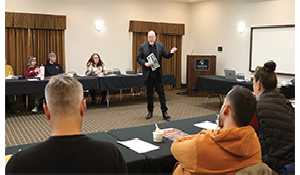
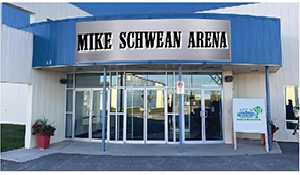
Last Wednesday in Lloydminster, Saskatchewan Premier Scott Moe and Alberta Premier Danielle Smith, plus MLAs from both provinces met ‘to make a unified call for national change.’ The meeting comes two weeks after a First Ministers meeting in Saskatoon, which included Prime Minister Mark Carney and 13 premiers from across Canada.
In a joint statement from Premiers Smith and Moe, six key points rose from the June 18 meeting and will proceed to the government of Canada.
“Together, we call for an end to all federal interference in the development of provincial resources by:
• Repealing or overhauling the Impact Assessment Act to respect provincial jurisdiction and eliminate barriers to nation building resource development and transportation projects;
• Eliminating the proposed oil and gas emissions cap;
• Scrapping the Clean Electricity Regulations;
• Lifting the oil tanker ban off the northern west coast;
• Abandoning the net zero vehicle mandate; and
• Repealing any federal law or regulation that purports to regulate industrial carbon emissions, plastics, or the commercial free speech of energy companies,” the statement read.
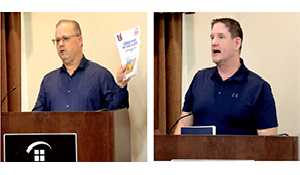
Moosomin-Montmartre MLA Kevin Weedmark was at the meeting in Lloydminster.
“It was a very productive exercise,” he said. “It was a very productive day, to be able to have those conversations and find out just how much we do have in common with our neighbours in Alberta.”
The two provinces are on the same page in many areas—especially natural resources as “Saskatchewan was blessed with all the potash and the all the uranium, and Alberta was blessed with a lot of the hydrocarbons,” as Weedmark noted.
“Another thing that we talked about a lot yesterday was port-to-port infrastructure,” he said. “Talking about a way of having better access to Prince Rupert, which is a very important port and to Churchill, or some other spot along the coast of Hudson Bay, having basically a corridor right across, and having oil exports, other exports, able to take that path and get to tidewater.”
Being the country’s only Arctic seaport serviced by rail, the Polar Bear Capital of the World might be on the cusp of boom times once again. The Federal government recently announced a $175 million commitment over the next five years to support and maintain the Hudson Bay Railway.
“Some of the discussion was on twinning the rail line out to Prince Rupert, adding some pipeline capacity to Prince Rupert because there’s more potential for hydrocarbon exports from there,” Weedmark explained. “Prince Rupert is very close to the Asian markets, just the way it’s situated. It’s a good spot to ship from, and then basically, having a port-to-port corridor, or having that come right across from the prairies to that, and then also access up to either Churchill or another spot along Hudson Bay, just so that you’ve got your export options. It would be a nation-building exercise. It would solve a problem—helping get our products to tidewater—and it would help build this nation. The Prime Minister now says he wants Canada to be an energy superpower, so it would be great to see this proceed.”
Will the feds answer the call?
After the First Minister’s conference during the first week of June, attendees left optimistic that their concerns were heard—hopeful that action on their concerns brought forward will come next. When asked if he thinks that mood of optimism continues to prevail, Weedmark noted a ‘wait and see’ approach.
“Everything the federal government is saying, a lot of things Mark Carney is saying about things like pipelines, it sounds good,” he said. “Now we need to see some action that backs up those words. Part of this exercise yesterday was trying to come up with a common approach from Alberta and Saskatchewan. Together, we are a very significant driver of the Canadian economy. We’re a very significant source of Canada’s export revenues—from energy, from other resources, and from agriculture. We’re an important part of this country, and it’s important that we work together to amplify our voice and make sure that we’re heard in Ottawa.
“What the Prime Minister is saying sounds good, but we thought we would get together and make sure that we’re speaking as clearly and in as united a way as possible to make sure that our voices are heard, and we’ll see what the Prime Minister does moving forward.”
The Lloydminster meeting also lands two weeks after Saskatchewan signed a memorandum of understanding with Ontario to improve trade between the two provinces.
“There’s been a vacuum of leadership at the federal level for a long time, and so the provinces have had to step up,” Weedmark said. “Previously, under the former prime minister, the reaction to that was trying to come down and silence those provincial voices. I think there’s incredible potential for this country if we can all work together. If the Prime Minister is as good as his word and he’s going to back some of these programs and projects, if the federal government isn’t going to try to interfere in areas of provincial jurisdictions such as the way we produce our electricity, that’s clearly an area of provincial jurisdiction. If we can all work together, if our provinces can build on their strengths and expand the way they want to, if the federal government’s there to help us and not hinder us, it’s incredible what we can do in this country.”
Strengthening ties
“It’s great to be there and see these ideas being formulated and being crystallized,” Weedmark said of last Wednesday’s meeting. “It was a great experience, and I was very happy to meet so many of my colleagues from Alberta and realize just how much we have in common.”
Weedmark is also confident that future meetings will occur between the two caucuses.
“There was a lot of lot of good discussion, a lot of progress made, quite a few friendships made yesterday,” he said. “I think everyone’s interested in meeting again and forging our future together.
“We want to move our provinces forward, and we’d like to move them forward within a strong and united Canada,” Weedmark continued. “We’re not waiting for leadership at the federal level to lead us in the right direction, we’re taking the leadership, moving in the right direction, and hopefully the federal government is there to support us.”