Helping food security locally and internationally: Harvest of Hope has raised over $700,000
September 29, 2025, 9:22 am
Ashley Bochek
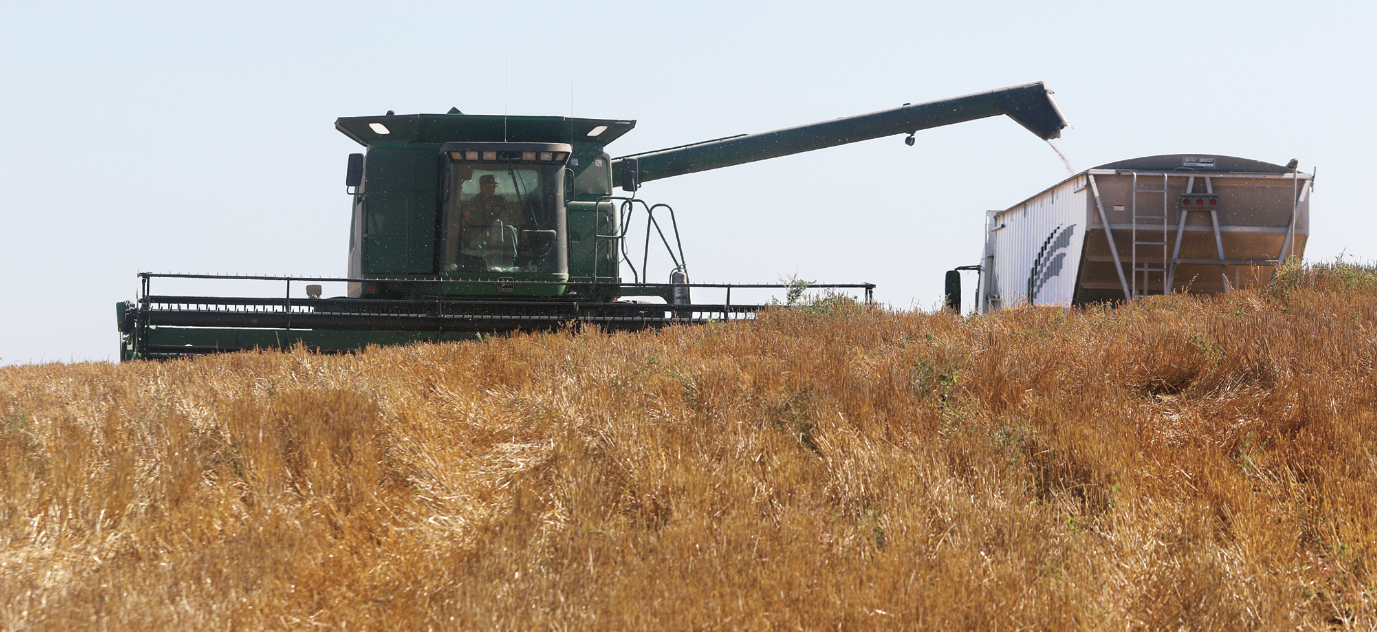

On Monday morning, farmers from around the area left their own fields and gathered in a field next to Highway 8 between Moosomin and Rocanville to harvest a crop not to benefit themselves, but to help hungry people down the road and around the world.
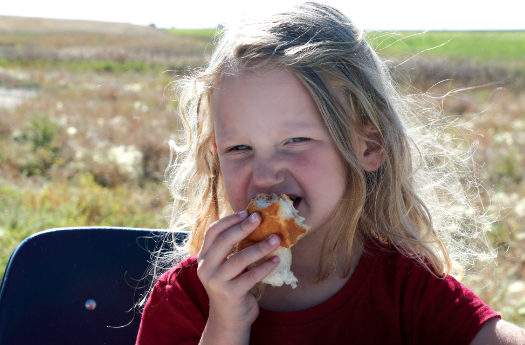
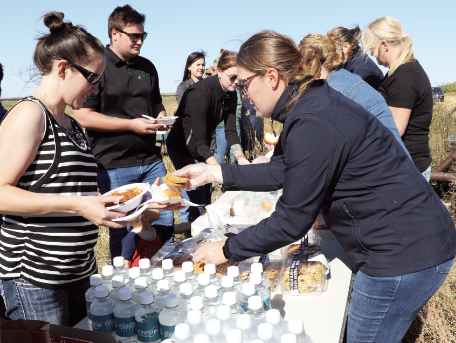
Along with local farmers, three Moos-omin equipment dealers were there with their harvest equipment. Credit union employees made lunch for the volunteers. Children played and ran through the field.
And the harvest rolled in.
Harvest of Hope is a communal project to help food security locally in Moosomin and Rocanville, as well as the most food insecure areas of the world.
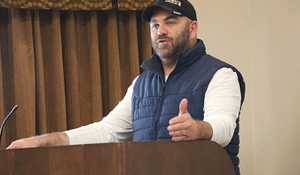
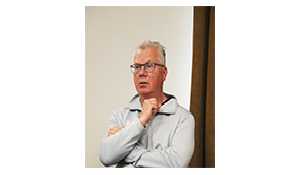
Volunteer Kyle Penner of Harvest of Hope explains the project and the contributions it has made over the 14 years of operating to help with food security locally and internationally.
“The Harvest of Hope is a community growing project that is a supporter of the Canadian Foodgrains Bank, and this particular growing project has been operating in Moosomin now for 14 years and we’ve raised just a little bit over $700,000 to date in total over the past 14 years, and all of that revenue has gone toward feeding hungry people.”
The Moosomin project is the largest Canadian Foodgrains Bank project in Saskatchewan.
How it started
Penner explains the project’s early stages over a decade ago.
“There was a group of local farmers who were passionate about starting this kind of project and they were approached by somebody who used to live in the area and now worked in the area in food security and knew them. They said they would love to start a project like this and we were able to get a few things together like land and input capital to help get us started. The land that we have used for all 14 years is rented and the owner of the land lives in Alberta, but it was rented through a connection with one of the local farmers that we were able to get the lease for that land.”
Penner says the project is supported by many agricultural companies.
“All of the OEMs (Original Equipment Manufacturers) in Moosomin, so Pattison Ag, Rocky Mountain Equipment, and Mazergroup, have been tremendous supporters of the project and we couldn’t do the work we do without their help, but when it comes to community support—those three and Vaderstad have all said, ‘We have equipment’ and they have used this project as an opportunity to showcase their equipment, demo it, to try different things, but they also use it as an opportunity to use their capacity to give back to the community.”
“John Deere, for example, has seeded the crop in the past and sprayed the crop in the past,” said Penner.
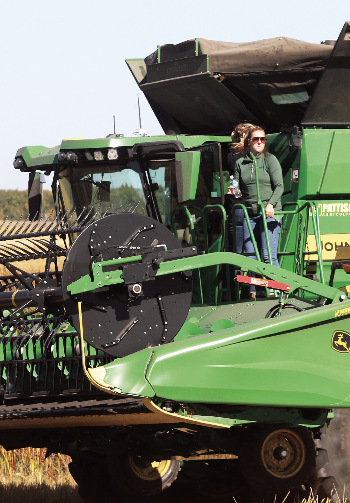
“They came out for harvest this year and provided equipment and labor hours on some of their equipment that they either want to teach people in their organization how to operate it or demo with potential customers and use the field that way, but at the same time help us to produce a crop every year.”
Community project
Harvest of Hope is made up of local farmers and volunteers who simply want to help feed people.
“It is a community project,” says Penner. “One of the values that the Canadian Foodgrains Bank puts forward is to engage the community in conversation about food security, and when you engage the community, you get volunteers who come back year after year to support the project. I know that within all of the organizations and the farming communities that come out to support us, they understand that the work we are doing feeds people directly—and obviously they have a passion for making a difference.”
He says the group involves many passionate local volunteers. “I think in a given year you would see the 20-some or 30-some people putting in the time to make the project happen. There is a core group of about six of us that take more a leadership and organizational role in the project. I help with all of the activities that are less directly related to farming.”
This year’s crop
“The wheat crop seemed to do okay given the growing conditions that we had. We had a late start with seeding, we had the cool summer, we had the rain just prior to harvest, and all of those things impacted its ability to be as good as it could be, but overall, we are happy,” says Penner. “We produced around 150,000 bushels. We haven’t sold the grain quite yet so we don’t have the final net revenue yet. The field is rotated so next year it will likely be canola.”
Harvest of Hope donates 75 per cent of the crop’s proceeds to the Canadian Foodgrains Bank.
“After all of the bills are paid, we take whatever is left and we portion it with 75 per cent going to the Canadian Foodgrains Bank that helps distribute foreign aid internationally for Canada and nationally within Canada around food security initiatives and in terms of an impact charity it is pretty substantial,” said Penner.
“To date, since the 1980s when they were founded, they have enjoyed a relationship with the federal government that can leverage any donations up to 4-to-1. If we give a dollar, through that leveraging, it can have the impact of $5 on the other end and typically it is in addressing immediate food security needs like buying food on the ground for the people who need it. So that is where 75 per cent of the net revenue goes and the other 25 per cent is divided between the Moosomin and Rocanville Food Banks. We’ve been doing that now for the last several years.”
Donations to local food banks
Penner says Harvest of Hope has been fortunate enough to donate thousands of dollars to Moosomin and Rocanville Food Banks during the holiday season.
“We’ve given them tens of thousands of dollars over the last few years and I know just based on talking with Sam (Campbell) how the demand for the services of the food bank has increased year after year since Covid, and I think even now they are at a higher demand from some of the other challenges. If money is tight to the point where people are going to the food bank, that means that more people aren’t able to donate, so they get hit both with higher demand and less input, and our project is set up hopefully so we can help offset some of that lower input and really help the food bank to be a sustainable source of food for people who need it locally.”
He adds, “Our project feeds people locally, but also all over the world. That is pretty exciting to think that something so grass roots in Moosomin can do so much. Harvest of Hope is about feeding hungry people in food security needs, locally, and abroad.”
‘Because I care’
Why does Penner volunteer his time for Harvest of Hope? “I do it because I care. It is a project that I think aligns with some of my personal values—peoples’ lives matter, having access to good nutrition matters. Lots of the people who access food bank services or are receiving foreign aid, they are not there because they chose to be. A lot of people that we feed overseas are displaced by war—well, they didn’t start a war, they are in a spot where they didn’t choose where they are but should be able to access food securely the same as we can here. So that is why I help.”
Grateful for volunteers
Penner says the group is thankful for the support from all the volunteers who help from seeding to harvest each year.
“We start with a lot of gratitude toward all of the people who volunteer their time, energy, and equipment in order to make the project progress. That is the backbone as to why this project has been as successful as it is because people are willing to participate, willing to come back, and willing to volunteer so we are grateful to all of those people.
“We are grateful to the people who have come later to the project, newer people who have signed up and said, ‘We want to join you in this.’ That is always exciting to get someone who hasn’t been involved to step in and help. That is really nice to see more engagement. Obviously, we couldn’t do the project without help like that.”
He adds Harvest of Hope’s contribution last year fed thousands. “Last Christmas when we made our donation—depending on how that leveraging ratio turned out—we were able to feed between 4,000 and 12,000 people for a month with the revenue we generated last year. You think about what you gave versus what the impact was globally—that is a pretty substantial amount of people we were able to help.”
Food Bank thankful for Harvest of Hope
Samantha Campbell of the Moosomin Food Bank says Harvest of Hope is the main supporter of their food hampers during the holiday season.
“It means a great deal to the food bank. They usually give us a great donation at Christmas time which is when we are trying to raise a bunch of funds for our Christmas food hampers and our costs kind of go up a little bit more than throughout the year because we are trying to do a full Christmas hamper for our clients. It will be even more appreciated just because our numbers are so high. We are hoping we are able to fundraise more and get a bit more donations, so we are able to cover what we are needing to.”
Campbell says the Harvest of Hope donation purchases food for their clients.
“Last year Harvest of Hope donated $12,000 and the year before was $8,500. We use that money strictly for food. We usually reach out to Borderland Co-op to do salads and the Elks usually donate some of the turkeys and hams, but this year we have more than doubled our hamper list. So, the donation strictly goes all toward food.”
Food Bank needed
Campbell says each week their client list for food hampers is growing. “Each month our list is growing. Last year we were averaging about 40 to 50 hampers around Christmas time and now we are at 80 hampers and then at Christmas time we usually get a couple who just need it during the holidays so we usually add on between five to 10 hampers as well.”
She says the Harvest of Hope donation is their biggest donation during the holidays.
“The Harvest of Hope donation we strictly used for Christmas and to cover our expenses at Christmas time, but it also depends on how much we get from donations elsewhere as well. To give perspective, on an average month in July or August when we have no extras to buy we spend $5,000 to $6,000 a month just on groceries. Then, come September—since we have been seeing a steady increase in clients, we are getting between two to four new clients probably every two weeks, so in September we actually had to cut back. In September we cut back the amount of food we are giving away just because we can’t afford to keep going the way we are going. At Christmas time from the Harvest of Hope and all of the donations coming in, that is when we see our big increase in monetary donations.
“We try to make those donations last throughout the year to keep buying food because we don’t see monetary donations as much after February until October when they start to come in again.”
Moosomin Food Bank supports food hampers to clients through monetary donations from individuals and local initiatives.
“Depending on the grants, a lot of grants are just for capital, so we are able to get a new fridge or new freezer,” said Campbell. “A lot of them don’t usually give us money for the food bank operation so we rely on our monetary donations strictly for the food portion of it.”
She says the food bank is thankful for Harvest of Hope’s donation to help support their clients throughout Christmas time.
“We are very grateful. Without the big donation from the Harvest of Hope each Christmas we probably wouldn’t be able to do a big Christmas for our client list.
“For October, we didn’t do a Thanksgiving supper that we have usually done in the past—I have been here for the past eight years now—and this is the first time we didn’t do a Thanksgiving supper simply just because we couldn’t afford it because we give away that much more food, but we are trying to make it last.
“We are really hoping with the Harvest of Hope donation that comes in—we are going to be hopefully relying on them giving us a larger amount where we don’t have to cut back for the Christmas supper this year.”
Donations needed
The Moosomin Food Bank is looking for donations to help support the people within local communities with food.
“If anyone is looking to give a monetary donation, we will take any donation,” said Campbell.
“With the Canada Post Strike going on it might take a bit to send one in the mail, but they are more than welcome to come to our location, or they can e-transfer as well. We do have a credit card machine at the store, so if they do come down and they do want their credit card points we can take their donation that way.”
Largest growing project in Saskatchewan
Rick Block of Foodgrains Bank Canada explains there are growing projects across the province that help support the Canadian Foodgrains Bank, but Moosomin is the largest.
“This year we have 25 projects in Saskatchewan similar to Harvest of Hope. One of those projects specifically is unique and it’s called ‘Grow Hope Saskatchewan’ and within that project there are seven field locations across the province.
“In total though we have about 32 field locations that are official growing projects in Saskatchewan and similar to Harvest of Hope in Moosomin. Outside of that, we also have at least three dozen growing partners and that is individual farm families, Hutterite colonies, and individuals who choose to donate to the Foodgrains Bank. Their donation represents work that is happening in the agriculture field even if they are not an official growing project.
“With the 25 growing projects plus the ‘Grow Hope’ sites—over the 32 sites—there would be approximately 3,800 acres that is committed to the Foodgrains Bank as registered growing projects in Saskatchewan.”
Block says the growing projects help raise millions of dollars for the Canadian Foodgrains Bank each year.
“Annually, from the growing projects in Saskatchewan we are usually between $1 million to $2 million—there are two big things that impact as well, the number of acres is pretty consistent, but the yield will fluctuate, and the price of grain will fluctuate so we will go from $800,000 all the way up to $2 million just on those growing projects.”
Foodgrains Bank
Block explains some background of the Canadian Foodgrains Bank. “The Foodgrains Bank originated as an organization in 1983. It was born out of a movement from prairie farmers who were growing more grain than could be exported and at that time it was controlled by the Canadian Wheat Board and farmers were telling the federal government, ‘it is not right to see piles of grain rotting on the ground when we know from watching the six o’clock news that there are people in other parts of the world that are suffering from hunger and starvation.’ So they advocated to find a way to donate their grain so people around the world could access it. So, years ago those grain donations were Canadian grain that was shipped as food aid—that no longer happens—now we use the financial resources from the grain.
“The activity of farmers and community groups like the Harvest of Hope which manage a growing project—they often represent around 45 per cent of the $18 to $20 million that the Foodgrains Bank brings in in donations each year. They also represent not just 45 per cent of the donations, they really are an inspirational source for many people who choose to donate even though they are not farmers.
“Many donors would have a farm background, and many donors would say, ‘I like the blueprint of people working together toward a cause’ and that is really a part of the Foodgrains Bank’s identity. It is not on the shoulders of just a few people. This is about many people who are coming together under a common mission and cause. The government matching dollars is certainly an additional motivator as well, knowing we can leverage further money through our partnership with Global Affairs Canada.”
He says the Canadian Foodgrains Bank has consistently supported 35 countries with food aid over the past decade.
“I work for the Canadian Foodgrains Bank and we are a registered Canadian Charitable Organization and we are known as a Christian response to global hunger. The Christian part because we are comprised of 15 church and church-based agencies, essentially relief and development agencies, representing 30 denominations.
“We are a response to global hunger because of all of these 15 agencies that choose to work together under the banner of the Foodgrains Bank—they all have their own international network. They are essentially relief and development organizations that respond to humanitarian needs and are involved in development work all around the world. Over my past 10 years the Foodgrains Bank year over year is consistently working in 35 countries around the world and sometimes up to 40.”
Block says the money raised through growing projects and donations to the Foodgrains Bank helps where it is most needed internationally.
“The money that is raised in Saskatchewan and also across Canada goes to the Foodgrains Bank. There are several government matching grants, and all of that money is actually then deployed to our partners within the international context. That is how the Foodgrains Bank supports the work in so many different locations and it is because of this vast network of these agencies that have been working for decades with local partners internationally.
“We have a longstanding connection with Harvest of Hope in Moosomin. They have been supporting the Foodgrains Bank for many years, but Moosomin Harvest of Hope has also responded quite well to the voices and perspective in the Moosomin and Rocanville area where there is a certain level of hunger in that region as well, so they are choosing to earmark some of their donation aside to help support local food banks.”
Support local growing projects
Block encourages donors to support local growing projects such as the Harvest of Hope to help support food aid around the world.
“People can always support the Foodgrains Bank by going to our website. I want to emphasize, though, one way in making your donation go further is by supporting your local Foodgrains Bank growing project. So for the readers of the World-Spectator, I would consider giving a donation to the Moosomin Harvest of Hope because they are going to put seed in the ground and they’re going to grow that donation by growing a crop.
“We have always been a grassroots organization and I think there is nothing better than to see supporters say ‘I want to support a local project that is doing a lot of good’ and I really appreciated the work of Kyle and Crystal Penner of Moosomin who are not farmers themselves, but they’re leaders of the community and they know one of the gifts they can offer is to provide the leadership and administration of a project and let’s let the farmers do their thing.”
To support Harvest of Hope, you can etransfer your donation to harvestofhope.moosomin@outlook.com or send a cheque to The Harvest of Hope, Box 57 Moosomin, SK, S0G 3N0.
Tweet








-SM.jpg)





 sm.jpg)