Dr. Kerkhoff shares details on Patient Medical Home initiative at Chamber meeting
April 13, 2026, 8:55 am
Nicole Taylor, Local Journalism Initiative Reporter
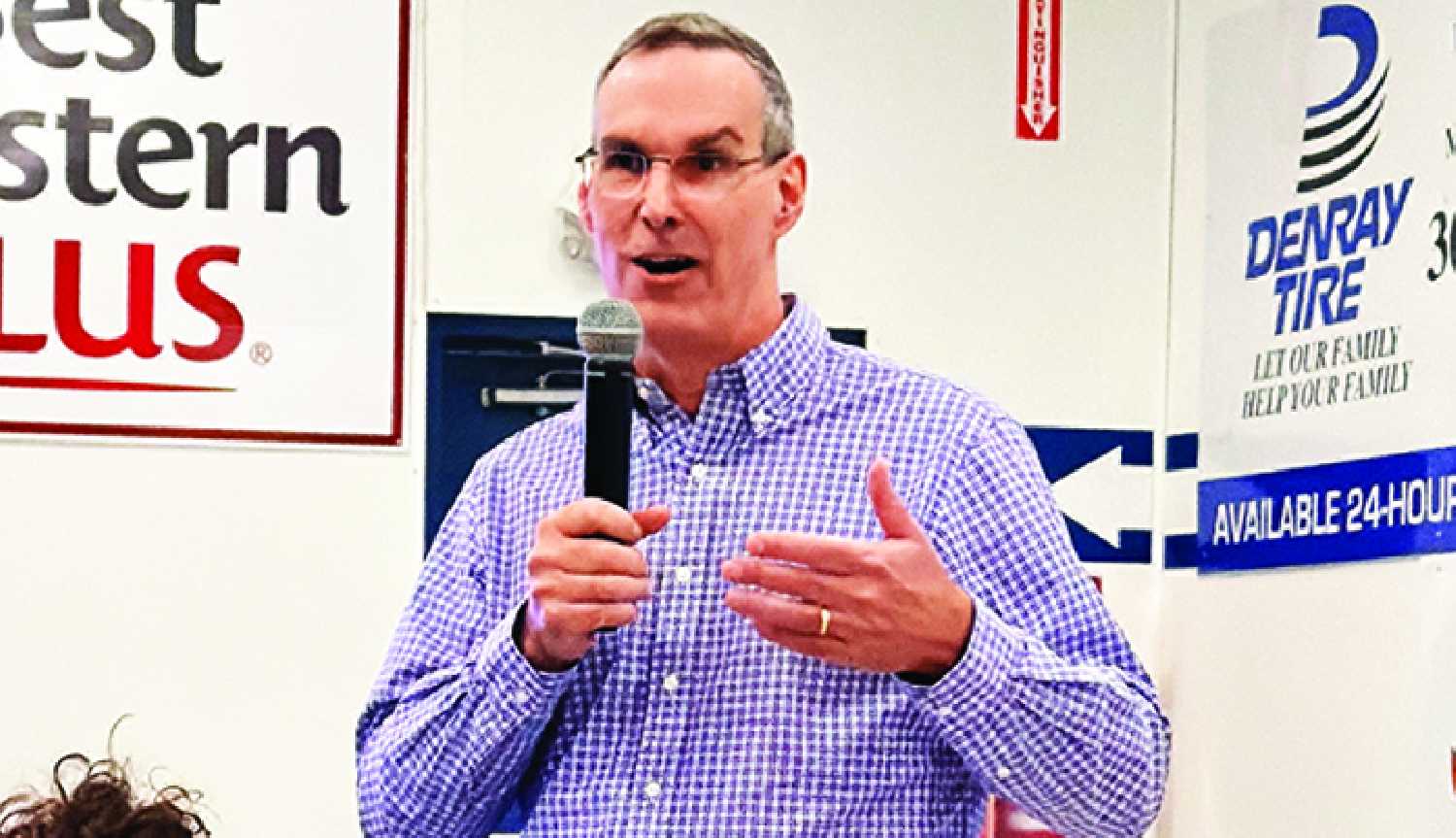

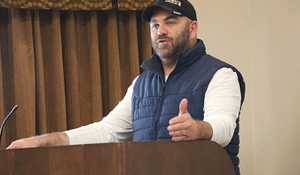
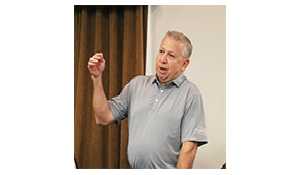
Dr. Ross Kerkhoff spoke about new developments in local health care services during a Moosomin Chamber of Commerce meeting last Tuesday, focusing on the Patient Medical Home (PMH) model. “There are some new developments in our local health care services, specifically the concept of a Patient Medical Home. It has been alluded to in the press, and the ministry has stepped up and provided sizable amounts of funds,” Dr. Kerkhoff said.
The provincial budget included $768,000 annually to expand health care in Moosomin by adding up to 6.2 new FTE positions at the Moosomin Family Practice Centre through the Patient Medical Home model.
“I’ll explain where those funds are going and explain what a Patient Medical Home is,” said Kerkhoff. “But before I get into what the Patient Medical Home is and what it means to providers as well as to the community, I’ll give a little background as to how we got to this point.
“To improve efficiencies in our healthcare system, there’s a growing emphasis on primary health care networks and team-based care. The Family Practice Centre is working closely with Saskatchewan Health Authority to develop this patient medical home to enhance health care services in our region. The patient medical home is a College of Family Physicians of Canada vision that aims to support primary health care providers by providing comprehensive health care via a central hub.”
Kerkhoff said the model builds on existing services. “We’ve had a central hub and satellite clinics for us pretty much as long as I’ve been there, which is 30 years, and I initially came as a foreign-trained doctor for a six-month locum program and was recruited by Dave Kirsch, Steve Gordon, and Ettiene Crouse. We have received help lately through SHA, but it is primarily a case of looking after yourselves. People to the south and people to the north, their health care services are struggling, and a lot of people are drawn to a central hub.”
“The emphasis is on a central hub with a core group of providers, a central hospital, long-term care, and then driving out to satellite clinics to deliver care there as well. That’s sustainable. So essentially, how do we maintain that, and how do we bring in the next generation of health care providers to take over from us? Five of us are 60 or turning 60. For the next five to 10 years, we need to plan, and we want to not only sustain this model, but recruit and educate the next generation of healthcare providers.”
Dr. Kerkhoff outlined the PMH framework. “As per the college, there are 10 pillars or deliverables that are necessary for successful PMH… many of which the practice has been able to deliver. Not to go into too much detail, but the Patient Medical Home is a college concept. It’s not our concept, and it’s there to help health care providers provide care in these 10 deliverables.
“The first three are the foundations. The first one is appropriate infrastructure, and we’ve been working very closely with our partners, and landlords, the South East Municipal Health Care Foundation, to renovate the clinic. I’m hoping that in the next two weeks, we’ll have four extra offices in the current clinic, and that’s for the new providers that are coming.
“The ministry has provided these funds to SHA. So SHA is doing the hiring, and these people will support us at the practice, and hopefully we can sustain the current health care services. To summarize, the ministry does the funding, SHA does the hiring, and then we assimilate and collaborate with these health care providers to provide the service. The functions essentially are to have comprehensive, team-based care, which is sustainable; accessible care, which you can all attest to, is a challenge; patient and family-partnered care; continuity of care; community adaptiveness and social accountability; ongoing development, training, education and continuing professional development; and continuous quality improvement and research, so there’s a bit of admin that goes into this. Nicolene Van Der Lely, myself, Dr. Cara Fallis, and Dr. Fraser Woodside are running this program. This was spearheaded by Dr. Wessel Roets in his role, and then Dr. Schalk Van Der Merwe, and we’ll be taking it forward. Previous advocates for health care include the late Larry Tomlinson and Bill MacPherson. Murray (Gray) has taken over the baton and Kevin (Weedmark), so we appreciate that.
“The foundations are in place. SHA is hiring these extra ancillary healthcare providers: registered nurses, a nurse practitioner joining in the summer, a dietitian, and a pharmacist. We have just sent out letters of invitation to our local pharmacists. Our vision for that—and we’ll get feedback from them—is to assist us with our chronic disease management. The second thing is a memory clinic, which we’re quite enthusiastic about. There’s a big need for that. And then there will be education sessions as well. We haven’t met with them yet; we’re just in the starting stages.”
Dr. Kerkhoff said the goal is to improve access to care. “We all know that sometimes there’s a four or six week wait just to get an appointment. With these extra providers, there will be a group practice approach. You may not be able to see your regular provider, but you can get a foot in the door with a nurse who would collaborate with that provider. No matter who you see, your primary health care provider is still in charge, steering the ship, so to speak. This would improve access to care, and it will be quicker so problems don’t fester and become bigger problems. We’re going to strengthen interdisciplinary team-based service delivery, improve preventative care through chronic disease management, and with that, hopefully reduce ER wait times.”
He said the ER uses a triage system. “You get a trauma, and emergency takes one to two hours, and then people are waiting to be seen. Everything through the ER is triaged. If you’re coming in with a respiratory complaint, you may be a CTAS 5, so the person with the MVC or heart attack is going to take precedence. What we can hope to see is that if you can’t get in, in a suitable time in the ER, there will be a spot in the clinic. This enhances continuity of care and ensures services remain responsive to community needs and demographic changes.”
Dr. Kerkhoff highlighted the benefits of stable health care for attracting residents. “There’s a lot of demographic change in our community: immigrant population, young people settling here, all the folks moving off the farm. I think that having stable healthcare is a drawing card. Having ample housing is a drawing card, having solid education is a drawing card, all the activities offered. Those are the things that are drawing cards for not only new community members, but also health care providers.
“We obviously want to advance clinical training and education. One of the successes is the residency program. Dr. Fallis came as a resident; she’s from Ontario, she did her undergrad at McGill, her medical degree in the Philippines, postgraduate in public health in Australia, and then family residency training in Moosomin. Another, Fraser Woodside, did his undergrad in Ontario, medical training in the Caribbean, came for a two-month rural rotation with us, and signed on. These are examples. If we don’t get them here, we can’t keep them, so we have to be able to get them here.
“The outcome is a stable team of health care providers working together to provide appropriate, comprehensive, accessible care to patients in our communities, whilst educating and recruiting future health care providers and helping maintain health care services in our area.
“Hopefully that explains what a patient medical home is—some of which we’ve been able to deliver, some we need to work on. It’s all about how we maintain what we have and enhance for the future.
“We have a dietitian from Kenosee area. We have two nurses, they are RNs who were employed at the hospital and have now joined us. Then a nurse practitioner starting in the fall, and a social worker would be starting in the next couple of months. Nicolene Van Der Lely is our MOA, and for the pharmacists, we’re just in the initial planning stages. We have to have everything up and running in the summer. But we’re ready; the first person started March 10.”
Dr. Kerkhoff described planned pharmacist services. “One day a week, the aim is to have a roster of pharmacists that would come in and rotate different services. One day, a memory clinic, the next week, a chronic disease clinic, the following an education session. But we need feedback from them to see how that would work and what’s feasible.
“You may not see your provider, but rest assured, it’s a group practice. You have one electronic medical record. You come in and have X complaint; I can follow up the next day or two and see what needs to be done. We always tell people, pick or choose two or three providers, because then you’ll have better access, because it’s all shared, and that’s been our strength, the group approach. Having more group members, nurses, etc., and they’ll function like they do at the hospital. You go to the ER, they take your history, they take your vitals, they update your med list, same thing. They’ll save time for us. With that, we could maybe see some more patients and be more efficient.”




-SM.jpg)

 sm.jpg)