Minister Beaudry says prospect of new resource ‘extremely exciting’ for Saskatchewan
The Thor Project
June 1, 2026, 4:33 pm
Kara Kinna


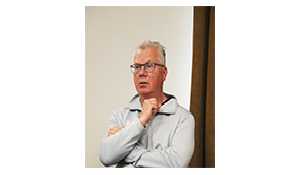
The World-Spectator spoke to Chris Beaudry, the Saskatchewan Minister of Energy and Resources, about the Thor Project.
In January, Canadian Energy Metals Corp. announced the results of its Preliminary Economic Assessment (PEA), which outlines the scale, quality, and potential economic viability of Canada’s first major domestic alumina resource. The PEA was prepared by two leading engineering firms and supports CEM’s Thor Project as a discovery of possible global significance.
The Thor Project has the potential to position Canada as a secure North American source of alumina, providing a long-term alternative to imported bauxite and strengthening critical supply chains.
Thor is located within CEM’s holdings of 2,557 square kilometres (987 square miles) in East Central Saskatchewan.
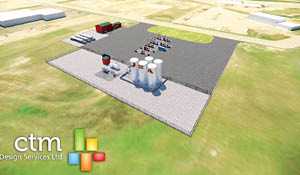
CEM’s PEA financial model contemplates a surface mining and processing operation with an average throughput of 16.5 million tonnes per year of ore feed, supporting alumina production of 1.8 million tonnes per year over a 25-year project life.
The Thor Project has the potential to create an entirely new processing and value-added industry for Saskatchewan and North America.
Following are the comments from Minister Beaudry:
Tell me a little bit about the history behind the Thor Project.
Canadian Energy Metals was founded back in 2021 and since the discovery of the Thor Project in 2022, they’ve made quite a bit of progress in defining the resource. Also, the government of Saskatchewan has supported the development of the project through the Targeted Minerals Exploration Incentive, which is a program that supports early-stage hard rock mineral exploration.
The Thor Project is extremely exciting, but also has a long way to go. The prospect of this new, significant resource, though, is extremely exciting for the province.
Why is the Thor Project such a significant find for Saskatchewan and also for Canada and North America?
One thing that’s great about our province is that we’re already Canada’s largest primary producer of critical minerals. And in 2026 we’re going to see commercial production of six critical minerals, including potash, uranium, helium, lithium, copper and zinc. And with CEM’s discovery of alumina, this helps show the potential for the further diversification of our mining sector.
What are the next steps in order to actually develop this industry, what needs to happen?
Currently, they’re developing a plan for economic production, which is essential. They delve deep into feasibility, project engineering and a few other things that are undertaken by the company.
What would the long-term implications be for our province, if the industry was developed?
The potential for a large critical minerals project is exciting for the province on the whole. It’s extremely exciting for the east central area of Saskatchewan, but it’s still in the very early stages, and mining projects can take many years to develop. There’s still a lot of benchmarks and milestones that the Thor Project needs to reach before it can be considered commercially viable, and I think it’s just a little early to contemplate the impacts of what it could do for Saskatchewan and the east central region.
How would this new industry position Saskatchewan in terms of resource richness on a global scale if it were developed?
Already on a global scale Saskatchewan is positioned as one of the strongest places to look for and develop critical minerals. We have 27 of Canada’s 34 critical minerals. We have an abundance of resources, along with our strong regulatory framework and attractive incentives. This makes our province one of the top jurisdictions for resource development.
I was just currently in Vancouver and Calgary, and when I would ask industry what needs to be done in Saskatchewan, they said nothing. You guys are at the
forefront. You are the benchmark for a government that brings in industry.
The preliminary economic assessment has been completed. What would CEM and the government’s next steps be?
Well, CEM did announce that they’re doing the pre-feasibility study in 2026, and as for the government, there are no steps for us currently. CEM needs to finish their feasibility study. They have a lot of work with the ball in their court before the ball gets put back into the government’s court—not even put back, but before we even see the ball for the first time.
What kind of timeline would we be looking at here? Do we have a rough idea how long it could take to develop something like this?
I think it’s still very early to determine that, and because of the nature of the project, that’s almost impossible to answer right now, but CEM is very committed to their project, and I think they’re going to move with as much haste as they can as a company.
What kind of infrastructure would need to be put in place to develop this industry, and how many people could it potentially employ?
I think we’re really early to be answering those kinds of questions, but the Saskatchewan government will work with the company and the surrounding communities to determine what’s needed when it comes to infrastructure and job creation.
What are some of the things the government can do to make it easier to pave the way for the development of this industry?
I think we touched on that earlier with our incentives, and what industry has said, that we’ve built a framework already that drives industry. Industry is looking at us, saying ‘this is a place we want to be.’
How excited were you when you heard about this?
It’s always exciting to see new projects, especially in an area close to my home. But I also would say, there are a lot of projects that show up in this industry, and many come to fruition and some don’t. And I really hope that this is one of the ones that comes to fruition and can really help East Central Saskatchewan and the entire province and nation.












-SM.jpg)