Kahkewistahaw welcomes herd of bison
April 6, 2026, 11:35 am
Nicole Taylor Local Journalism Initiative Reporter
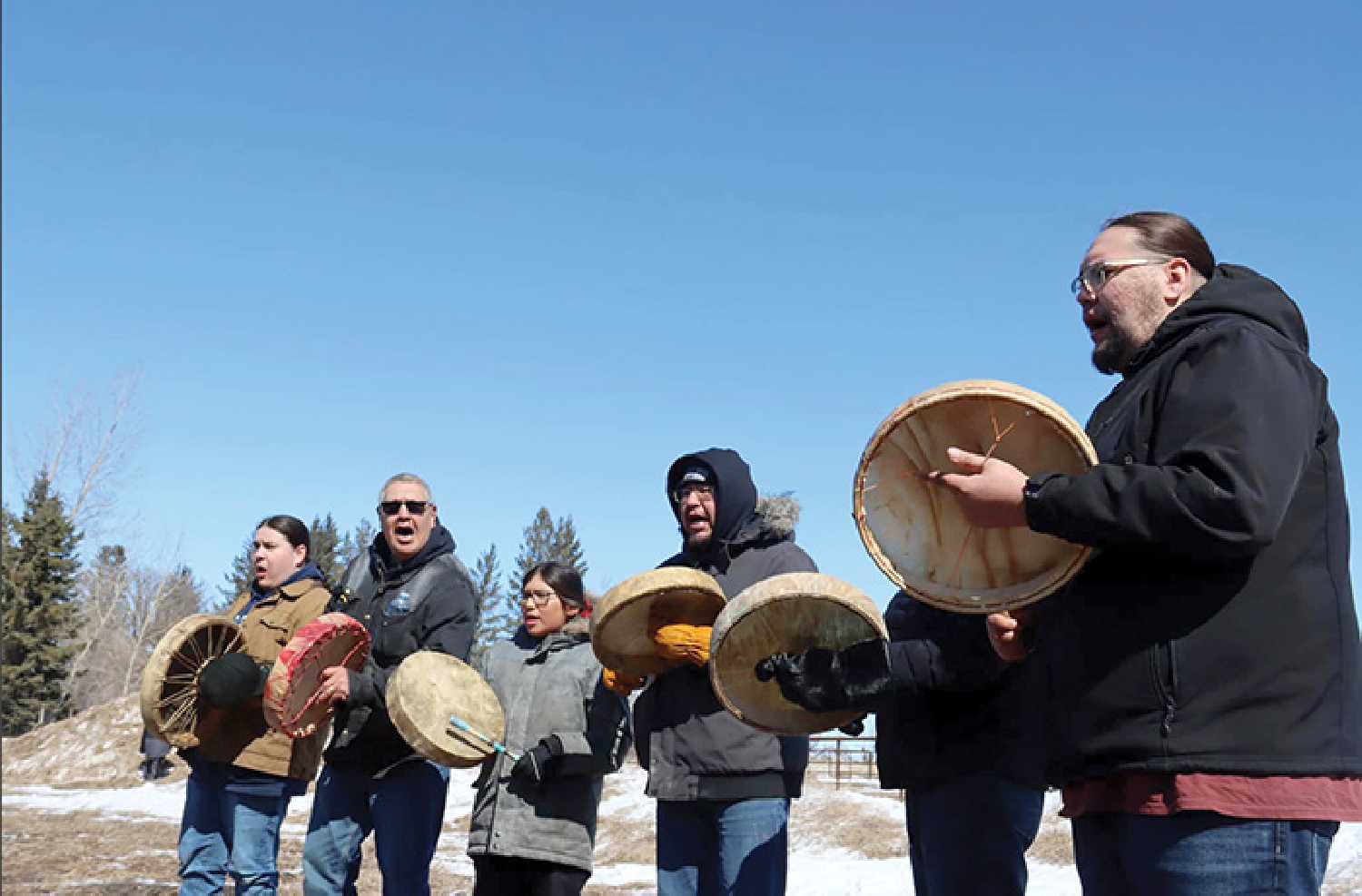

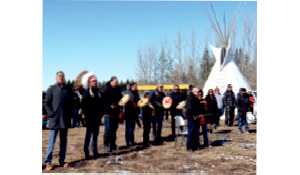
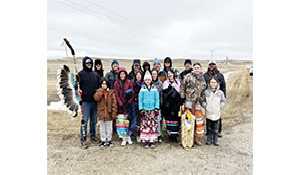
On March 27, members of Kahkewistahaw First Nation gathered to welcome a new bison herd to the land, marking a step toward food security and sovereignty. The project has been several years in the making.
Chief Evan Taypotat said the idea began during the Covid-19 pandemic.
“This obviously started when Covid hit us in 2020. We didn’t have any meat, self-sustenance. Not long after, in 2022, we started talking about making this day a reality. These buffalo are high maintenance, they take a little bit of TLC to look after them. So we got everything in place. We didn’t rush things,” said Taypotat.
“It doesn’t happen overnight. It’s a lot of planning, four years.
“In 2024 we found a herd we liked and found people in the province willing to work with us. In 2025, we said, let’s get them out there,” he said. “Four years to get here, and I couldn’t be happier to be chief today.”
The event included drumming, singing and a ceremony led by Chief and elders.
The herd currently includes 16 female bison, with plans to expand.
“We’ve got 16 female buffalo out there. Four are already pregnant. We’re adding a male in the fall, and we’re just hoping that every year they can reproduce. You’ve got to make sure it stays as clean as possible so that you get a good, healthy buffalo,” he said.
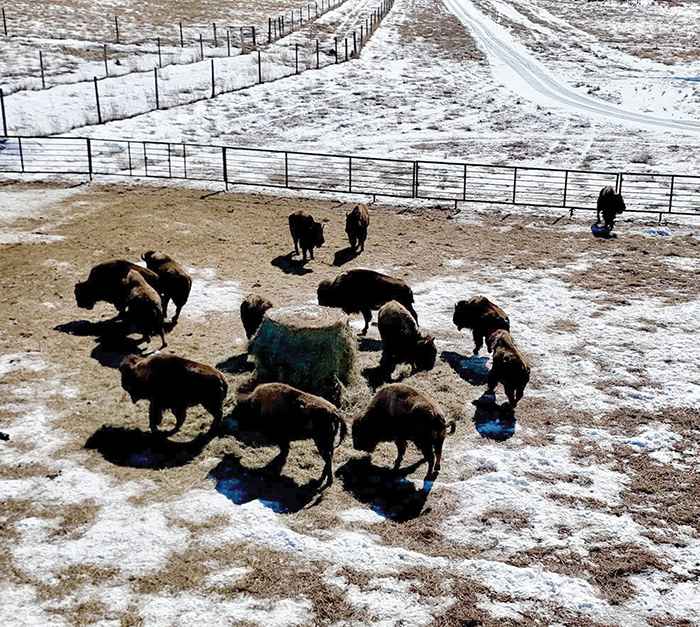
Taypotat said the return of the bison is part of a broader push toward self-sufficiency.
“For us, it’s a good day today. It was important to us that we make those little steps towards sovereignty, and this is one of those days,” he said.
The herd is currently located on land purchased from a local elk farmer, where the animals are being introduced before eventually roaming more freely.
“Ideally, this would have been on our First Nation, but the way this elk ranch was set up before, it’s perfect for them right now. They’re going to open this up, let them get acclimated to the land and where the water sources are. Once they figure that out, they’re going to let them roam this land here,” he said.
“In a perfect world, this would be on the First Nation, but we’ll get there. This is a small step,” he said.
The land continues to be used for community gatherings and cultural programming.
“We bought this land from a local farmer a few years back, and it’s a good place for us. We have a band member that lives in the house. We come out here and do a culture camp every year,” he said.
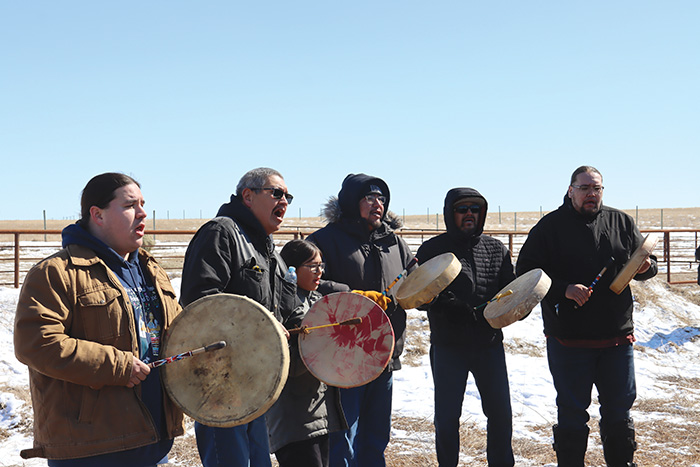
“This land, our ancestors lived on this land. If you walk around, you can find artifacts, arrowheads, things like that,” he said.
“I see it as a good place for our people to be and our buffalo to be,” he said.
“Two hundred years ago, buffalo roamed this land freely. When treaty was signed in 1874, they say there were only 300 buffalo roaming this land. We’ve got 16 of our own right here, right now,” he said.
“This herd is going to grow. We see other First Nations that started this in the early 2000s, and their herd is now 300. Ideally, that’s where we’re going to be in my lifetime,” he said.
“If there ever is another pandemic, we want to be able to feed our people,” he said.
“Everything I’ve learned about these buffalo, they need lots of land to stay healthy to run, to roam,” he said.
“The songs they were singing today were welcoming the buffalo—‘this is your home, we will look after you.’ We want to let the buffalo know we’re with them. We’re together, and it’s going to be a good relationship,” he said.
Taypotat said the effort involved multiple departments and community members.
“The whole team pulled together to make today happen. This wasn’t a chief and council thing. This was a lands department thing,” he said.
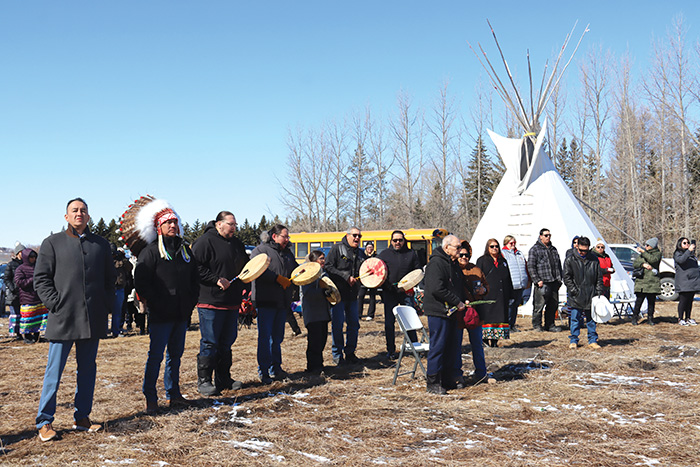
The herd will also support local food programs and education.
“We’ll probably take a few every year and feed the elders and the youth at the school,” he said.
“Our school has a really good land-based program, teaching our kids how to hunt, how to skin, how to eat, how to quarter animals. It’s getting back to the way things were,” he said.
He said the initiative is also tied to reclaiming culture and identity.
“With residential schools, we weren’t supposed to have any of this. It was supposed to take the Indian out of the Indian. We’re getting the Indian back in the Indian right now. Today is a really good step,” he said.
Looking ahead, Taypotat said the work toward sovereignty is ongoing.
“If I was to measure sovereignty on a scale of one to 50, we’re at 20 right now. Another 30 steps to reach that full point, our own doctors, our own elders home, our own police, our own ambulance, our own hockey rink,” he said.
“This is a small step, but it’s a step we needed to take to feed our people,” he said.
“Everything we do is about trying to achieve sovereignty. We want to live long, meaningful lives, just like the surrounding communities. We want to make that on our homelands too,” he said.
Council member Corey Alexson said the return of the bison reflects a reconnection to identity and culture.
“Coming back to who we are as First Peoples, as First Nations families, and who we were traditionally, we know that the buffalo themselves were our main source of livelihood,” Alexson said. “They kept us fed, they kept us warm, and basically led our steps, the places where we set up our camps, our home fires. They led us to our safekeeping.
“It’s significant, life itself, because they kept us alive and kept us well. And then just the connection. We see all our generations here today with Kahkewistahâw and our relatives. It shows the importance of who we are as Indian people and keeping that connection with the buffalo.”
Alexson said being part of council during this time has been meaningful.
“It’s been awesome. It really strengthens my spirit and my heart. Having our long-time serving Chief Louis with us today signifies the continuation of his work and his vision and his teachings, and passing that forward for us to continue on.
“It’s not just economically. It’s who we are as people, remembering who we are and who we’re always going to be.
“I know it made the elders happy, but when you really pay attention to our little ones, they’re going to be the ones who take over. Teaching them young the importance of who we are as Indian people, they’re learning by watching. Having them participate in the ceremony, they feel welcome, they feel a part, and they feel safe. They’ll respect that.
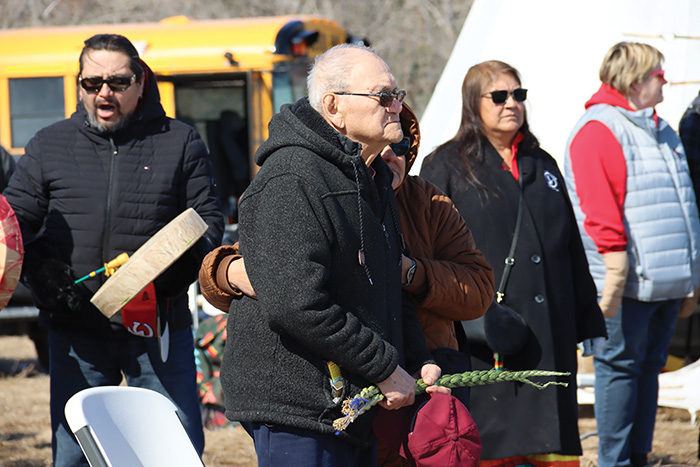
“I see the importance of schools across Saskatchewan widening their teaching and recognizing First Nations within Canada. It comes back to good people that will make us stronger in who we are, because we’re all related, we’re all family. It’s about bridging that relationship and making all of us stronger.
“We’re always community-driven,” said Alexson. “We’re always strategically planning, not just at our table, but involving our administration and the community. You see how well represented they are today—keeping them involved and a part of all our projects in all capacities.
“Coming back to who Kahkewistahâw is, in the Cree language, speaking of that visionary, Chief Kahkewistahâw was the eagle flying in the circle. So always having that vision and never letting it fade or slow down, just keeping that focus and leaning on one another as a community.
“Seven generations from now are going to reflect and look back at what we’re starting here. That’s the exciting part. When we’re doing the planning and doing things like this, I want to be able to smile and have those young people acknowledge us and say thank you for supporting where we are today.
“The teachings that were given to us aren’t for us to hold onto, they’re to give away, especially to our young people. So it will be good. It is good.”
Tweet